
Lessons in Leadership, Culture and Change from the Mosh Pit

In the summer of 1984, I discovered punk rock music. It changed my life, and it shaped my identity – and it utterly informed work as an organizational change consultant. 

I never grew a Mohawk or pierced my nose. I didn’t snarl at old women crossing the street. I was never a big fan of anarchy. No, the popular trappings of punk rock weren’t really my thing. For me, punk was a political, intellectual, and emotional force for change.

To understand the politics of punk, and its impact on a generation of American kids, it helps to understand the 1980s. The economy was creeping along. The Cold War felt hot. American culture felt stale and homogeneous. (Go watch “The Americans” on FX. Seriously.)

The early 1980s was not “morning in America.’ It was pretty bleak. 

In the words of actor John Cusack, “There's also some element of coming of age during the Reagan administration, which everybody has painted as some glorious time in America, but I remember as being a very, very dark time. There was apocalypse in the air; the punk rock movement made sense.”

In the time before the Internet, punk was a refuge of the lonely and misunderstood. It was where I learned to emotionally connect with others, bootstrap my own future and collaborate to create something significant.

“Time was slow back then. Things were barely moving, and this music came along and it was like an electrical charge,” recalls filmmaker Dave Markey in the film American Hardcore.

When I was 16 years old, punk rock in America was evolving from its urban and arty nihilistic roots into the suburbs. Time may have been slow. The music was fast and furious. The attitude was unapologetically political.

Punk music introduced me to the power of having a point of view. I was much more into The Clash’s smart, but angry, political stance than I was into the musically and personally abrasive Sex Pistols. Closer to home, the almost intellectual nature of the D.C. hardcore punk scene – Minor ThreatScreamGray MatterDag Nasty – and the angry, yet affirming, Boy Scout energy of bands like 7 Seconds appealed to me more than the in-your-face New York sounds of Agnostic Front.

But it was Richmond’s punk/hardcore scene in the 1980s and 1990s that most shaped my thinking about myself, and about others. The local scene was an amazing community of incredibly diverse nonconformists.

In Richmond’s punk rock community, I found a tribe of people who were curious, friendly and radical. I discovered feminism, globalism, environmentalism and politics. I developed self-awareness, and discovered the power of shared energy, connection and positive emotions. I learned that I didn’t need to wait to be invited to someone’s table – I could build my own tables.

Over the course of my adolescence and through college, hardcore punk was a social, emotional and intellectual cornerstone of my life. I booked bands, hung out with bands, and toured with bands. I published zines built around local music that I distributed around the world (by mail). I hosted radio shows, and interviewed dozens of traveling bands. I spent hours sitting on sidewalks along Grace and Broad streets connecting with others. And I did most of this before I was 18.

Listening to Graven Image; hanging out with Unseen Force and Four Walls Falling while they practiced; or interviewing Honor Role in a Hardee’s on Broad Street – through it all, I absorbed subtle lessons about the power of music and change. Distributing my own, self-published zine – a photocopied montage of typed record and show reviews, band interviews and bad poetry – connected me with people around the world. (At a time when the world was not so connected. 

What I didn’t fully appreciate then was how much all of this was teaching me – about myself, about community and about building the future. When I reflect back on my journey through Richmond’s punk and hardcore scenes, it’s easy to see how key lessons from Grace Street evolved into my key consulting philosophies:

  • Build your own table. If you’re tired of waiting to be invited to the metaphorical table by others, stop waiting and start building. If you don’t like the tables that anchor your community, stop complaining and start building. Oh, and make sure the table you build isn’t as exclusive and annoying as the ones it replaces. When alcohol regulations all but shut kids under 18 out of rock clubs in Richmond, some friends and I convinced Charlie Brown at New Horizon’s Café to let us book all age shows on Sunday afternoons. (I was 15 years old.)


  • You can do it yourself – but it’s more fun, and usually better, when you include others. There’s power in bootstrapping ideas with other people. There’s real energy found in enlisting a small group of passionate, like-minded people to come along for the ride. Connecting smart people with other smart people is transformational. Successful (a relative term, believe me) punk bands were built by local radio stations, fanzine editors, risk-taking club owners, and by someone who worked at an office with a photocopier (to print flyers, of course). Being a small link in a chain of people who helped bands thrive was significant. 


  • When someone falls, pick them up. In the mosh pit of old (think more organized slam dancing), if someone stumbled you helped them up. When a kid dove off the stage into the crowd – we did that a lot – you’d reach up to catch them. (Um, sorry about that one miss at that Black Flag/Rollins show, Kit.) When a band needed a space to practice, you opened your door. If someone didn’t have enough money to pay at the door, you found a way to sneak her into the show. Supporting the success of others is all about reciprocity.


  • Diversity rules. There was a magic moment in Richmond where you’d go to a show and old school punk rockers, everyday college kids, straightedge hardcore kids, skinheads, skaters and Goths stood shoulder-to-shoulder at a show. The scene was predominantly white and male, but girls formed the best bands, put out powerful fanzines, and launched their own record labels. Blame my sheltered suburban life, but my first real black, Asian and gay friends emerged from my involvement in Richmond’s hardcore scene. That diversity had impact. The music was better, the community was stronger and the energy was more positive when different voices were on stage.


  • Change starts with you. Bands like 7 Seconds and Verbal Assault taught me about looking in the mirror and the importance of self-awareness years before I knew who Carl Jung was!


  • It’s okay to let other people on the stage. The best bands welcomed their fans on stage for the inevitable moment when fans grabbed the microphone to sing along with their favorite singer, or to “mosh” on stage for a pregnant moment before stage diving into the crowd. There was room for everyone on stage. 

I'll wrap up with five songs that that are the pillars of my American punk hardcore consultant education.

Clampdown by The Clash is just one of so many calls to anger from this British group. Forget musical genres – The Clash is hands down one of the top bands of the last century. “Let fury have the hour / Anger can be power / Do you know that you can use it?” 

Heal by Verbal Assault is one of my favorites by this Rhode Island band. I was in awe, hanging out with these guys, 7 Seconds and Ian MacKaye from Minor Threat one night at the 9:30 Club in D.C. “Empty with no respect at all, we expect what’s been built to crumble and fall / Shocked at the indifference to our unheeded call / May I ask you what do we offer instead? / We can’t change around until we change within / To scream and yell and sloganize only shields us from our own lies” 

#1 Rule by 7 Seconds is not my favorite song by these champions of punk rock as “a positive force.” But its clear, non-comformist message has always resonated. “Number one rule is no rules / Number two they’re not for you / Number three they’re not for me / Number four, don’t be ignored / Number five to live our lives we must break down stagnant rules.”

Sink with California by Youth Brigade with its overtly anti-nationalist, anti-fascist theme remains one of my favorites – “I’ve been all around the country, and I’ve met a lot of kids / Some kids are smart, and others are dumb, but I don’t pass judgment they’re just having fun… / The kids are our future. You can see it in their eyes / We must overcome mediocrity if the world is to survive.” 

Salad Days by Minor Threat is a great reminder from our neighbors to the north (Washington, D.C.) that we’re all getting older, and that moving into the future is important. Minor Threat’s real impact came from giving birth to the straight edge movement, a subgenre of hardcore punk that rejects alcohol and other addictive habits as unnecessary crutches. Singer Ian MacKaye was another early entrepreneur – his label, Dischord Records, is still running strong today.

Work on the Work Week: July 6 through July 10

A few years ago, it happened that Theran, Caroline and I found ourselves in the office with no client projects for the entire week after Christmas. We got a tremendous amount of work done, and thus was born Floricane’s Work on the Work week.

It happens twice a year – 10 days where we avoid client work, and focus our time and creative energy on the business. And it’s really 20 days of focused time – our whole team is on vacation both weeks prior to the Work on the Work weeks.

This year – with two new team members and some major new projects coming on line – we’ve decided to step it up a notch.

Floricane’s 2015 Work on the Work week is a moveable feast of sorts.

We’ll start on Monday, July 6, with breakfast at Gather with the coworking space’s awesome manager, James, and the team from Dodson Properties. We’ll work for three hours, and then head to the Robins Foundation for lunch with the foundation’s dynamic team – and three more hours of work. The Valentine, VCU’s Depot, One South Realty, Lewis Ginter Botanical Garden, and the Virginia Museum of Fine Arts are also on the list. (Day five will be spent at the statewide Virginia Sister Cities Conference – hosted by Floricane, and featuring a keynote by Anne Goddard of ChildFund, International.)

During the week, we’ll spend relaxed time breaking bread with about 100 folks from key client and partner organizations – and wrestle with eight blocks of key business content to help Floricane strengthen and improve.

Look for daily updates on our Work on the Work week starting Monday, July 6!

The Corporate Picnic!

A few years back, the Floricane team and our families gathered together at a Lebanese restaurant on Broad Street for a year-end celebration. There were five of us, and assorted partners and kids. That event was followed by a lot of transition and change.

Which brings us to June of 2015. Our new team -- Anne, Debra, John, Julie, Lesley and Theran -- is on the ground and running, and we've seen the benefit of new energy. We've also recognized the value of celebrating our successes more often.

It took our new team members -- Lesley and Julie -- to initiate and to organize our second Floricane family event. This time we had a picnic, and managed to pick the night after the heat wave broke. It was a perfect evening to hang out with 10 adults, 10 kids and a turtle. (We were at Maymont, after all.)

Our next big party? Stay tuned for news. It's going to be in October, on a roof, and there will be aerial drones.

New Project: Building Industry Leaders

We are always, and I mean always, excited about our work with the Virginia Beer Wholesalers Association. Between the knowledge Theran is accruing about arcane ABC laws and the changing nature of the beer industry, and the relationships we've developed with a group of business people who are serious about their future, every engagement we have is energetic and positive.

This summer should be no different, as we welcome almost 30 young leaders from more than a dozen companies across Virginia to be part of the VBWA Next Generation program. Theran and I will spend seven months with this cohort, exploring elements of leadership and growing their understanding of and ability to lead within the beer industry in Virginia.

New Project: Onboarding New Leaders at ChildFund

We've become big fans of the team at ChildFund, International -- partly because their mission-driven work to impact the lives of young people around the world, and partly because they're an amazingly likable team of change makers.

This summer, we continue our journey with ChildFund's leadership as we work with their global fundraising and global human resource teams to "onboard" new leadership.

In our experience, onboarding often means an orientation class for a new employee, and maybe a week of scheduled meetings with key people. ChildFund felt that it was really important for their new leaders to land in their new roles with teams who had spent some serious time preparing for their arrival. The overall goal is to accelerate integration between the new executives and their teams; to maintain focus on key organizational goals; and to ensure a fast, effective and positive initiation into ChildFund's culture and work.

New Client: Friends of the Lower Appomattox River

We're spending our summer on the shores of the mighty Appomattox. Okay, not so much.

But we are excited to be working with the Friends of the Lower Appomattox River, a 157-mile river that stretches from the town of Appomattox near Farmville to the James River at City Point in Hopewell. Our work with FOLAR is part of a larger collaborative organizational assessment project with five nonprofits in the Tri-Cities being conducted by Organizational Solutions and the Cameron Foundation.

Over the span of two months, we'll work to assess FOLAR's opportunities to strengthen their capacity to make a positive impact on the Appomattox River. We're excited to be able to help the team at FOLAR explore their future.

Deploying our “found insight” at Floricane

Sometimes you stumble across a phrase the makes the complicated simple.

Twitter introduced me to a recent post by VCU Brandcenter professor Mark Fenske about something he calls “found insight.”

Fenske was writing about what separates agencies that make ads from those that make great ads. It’s not the snappy office layout, or age, or the quality of their Keurig coffee.

It’s simpler than any of those things.

It’s whether the agency’s processes help to leverage and amplify found insight, or kills found insight.

Found insight is what one gets once one has started on a project.

It is not the map with which one starts a reconnaissance of an area but the redrawn map one returns with from having been there to look and smell and measure.

Found insight is something you discover that you wish you’d known when you started.

I think it’s a pretty beautiful concept. It’s also how the team at Floricane approaches our work.

This spring, I exploded several strategic plans mid-process simply because the shape of the plans (the content and structure of the written document) could not effectively hold the idea that was emerging from each plan. In both cases, the client breathed a sigh of relief when the dramatically revised plan emerged – because it felt more aligned with our shared found insights into their organization.

The longest portion of our strategic planning process is what we call discovery. (Or what we should start calling found insight.) It involves gathering anecdotes, chatting with key stakeholders, reading through white papers and old planning documents – and then synthesizing, and then re-synthesizing with the client, until strategic ideas begin to emerge, solidify and develop energy.

We can spend weeks in discovery, and it drives some clients to the point of despair – because they think they already know what the plan should look like! Truth be told, they probably do. But our shared knowledge is deeper, and the plan’s content is richer, after we engage in discovery together.

Integrating new ideas into existing constructs is what the human brain was designed to do. Found insight is simply inviting new perspective to have weight and impact. It’s allowing your strategic process to inform your strategic plan.

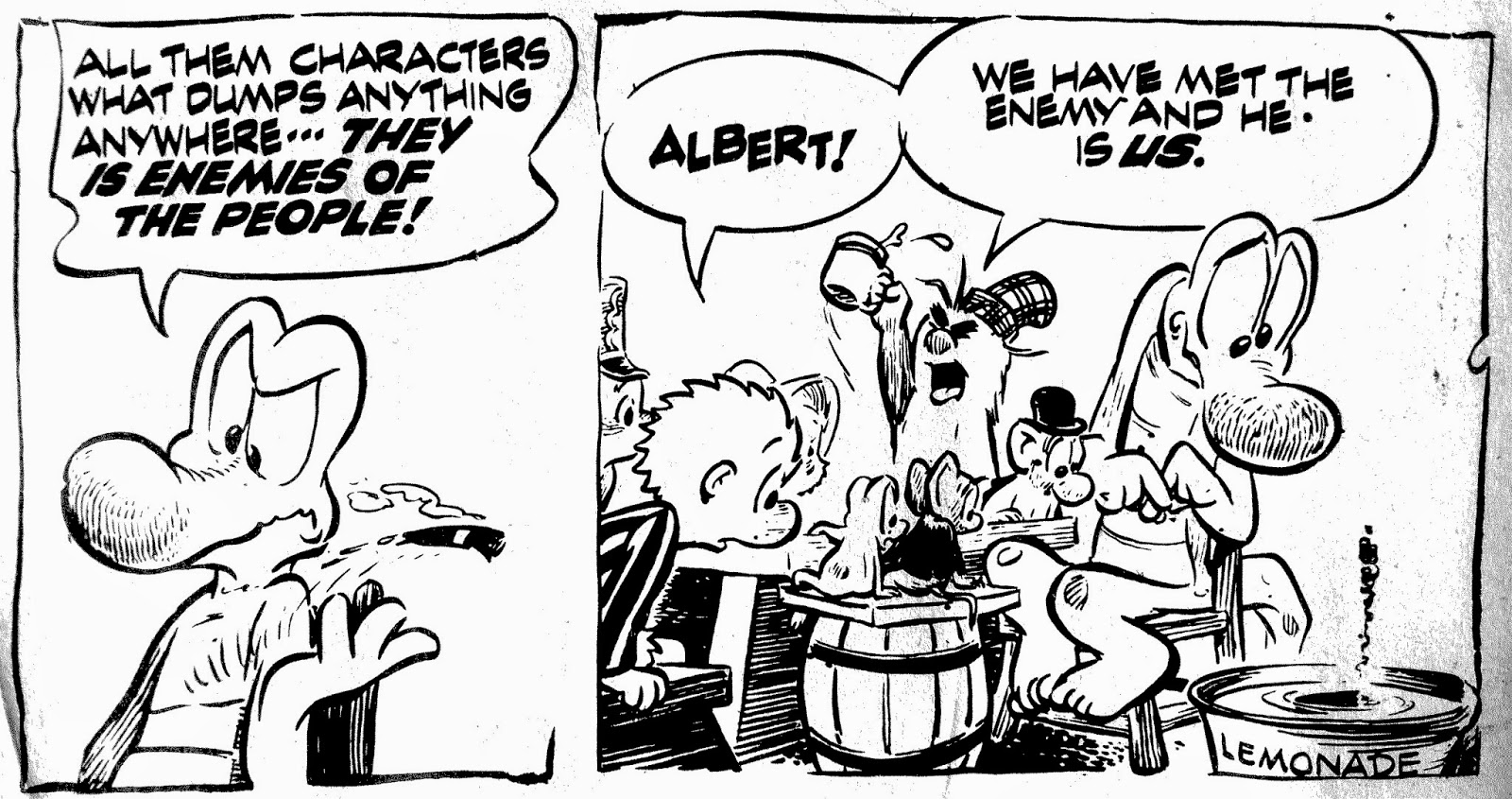
"We have met the enemy, and he is us!"

A recent article in Forbes by leadership consultant Joseph Folkman recently caught my attention. Folkman observed that the vast majority of the thousands of leaders he’s worked with over the years do not value self-development. “Practicing self-development is the gateway for improving every competency, and it should not be ignored,” he writes. “Why do leaders avoid it? And why do they fail?”

His observation – which mirrors my own, albeit less experienced, take – that too many people (and not just leaders) too often put their own professional and personal development on the back burner is disconcerting. And not just because my business relies on people investing in themselves. 

Folkman identifies several reasons why people fail at self-development – they don’t know how to listen; they aren’t open to the ideas of others; they aren’t honest with themselves; they don’t take time to develop others; they don’t take the initiative.

I’ve seen all of these in action. I’ve probably exhibited each of them countless times in my own leadership journey. But I’ve also seen, and experienced, a deeper problem – leaders who simply lack the awareness that they represent the tip of a bigger development opportunity.

In our work at Floricane, we’re often brought into organizations with the best of intentions. Our clients see a real developmental need in the organization, and want us to work with senior leadership to make adjustments. Those adjustments usually involve other people.

Too often, I am reminded of Walt Kelly’s pointed cartoon strip Pogo of long ago – “We have met the enemy, and he is us!”

It’s sometimes painfully amusing to listen to leaders who talk a great talk about the importance of self-awareness and leadership development – for everyone below them. They believe that the fact that they’ve brought us into the organization for a serious engagement, that they’re making an investment in their people, is evidence that they’re good leaders. A mirror is one leadership tool remarkably absent from their professional toolkit.

“We’ve worked with dozens of consultants over the years,” groused one leader we met, “and nothing’s ever changed. Why should we think that you’ll be any different? 

My immediate thought was that he should expect exactly the same results. After all, he and his fellow leadership team members were the only common denominator across all of those engagements.

Before you can truly fail at self-development, you’ve got to engage in self-development. Once you engage in self-development, you can apply Folkman’s key behaviors:

·      Active listening for content, meaning and emotion in every conversation.

·      Being open to others’ ideas, and soliciting their input and feedback regularly.

·      Being honest with yourself, and regularly looking in the mirror for opportunities to improve.

·      Develop others, and model self-development through your own actions.

·      Take the initiative and get started.