Playground Perspective (September 2014)

Playground Perspective (September 2014)

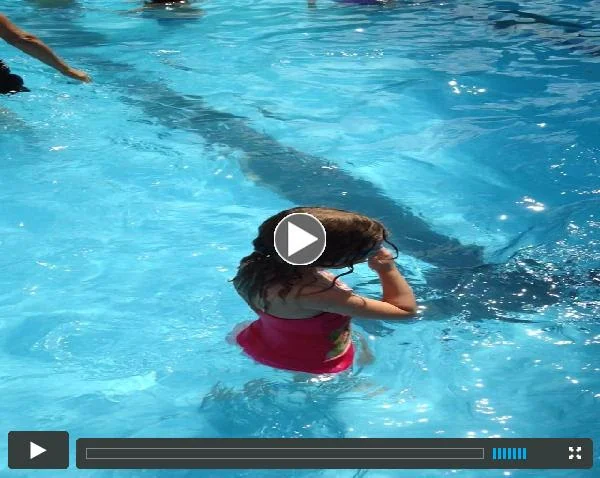
Last summer, I wrote about watching Thea wade through her personal developmental journey at swimming boot camp. It was a difficult experience for her - and for us! She was pleased as a peach to have completed the four-session immersion program. And she never wanted to go back.

As we moved into her sixth summer, Nikole and I were determined that our daughter would learn to swim. We had beach and river vacations planned, and wanted her to be safe and to be able to have fun without clinging to us (me).

Early in the summer, we managed to squeeze a handful of lessons in at the Jewish Community Center, one of which I observed from the sidelines. It became clear to us that once a week wasn't cutting it.

Even Thea was frustrated. She quickly went through the Three Phases of Swimming Frustration: dismissive swagger, confusion, and then frustration.

[video after the jump]

Meet People Where They Are...

When things go wrong, it's human nature to place blame on anyone and anything other than ourselves. "So-and-so didn't do what they said they would." "I wasn't given the necessary resources." Etcetera.

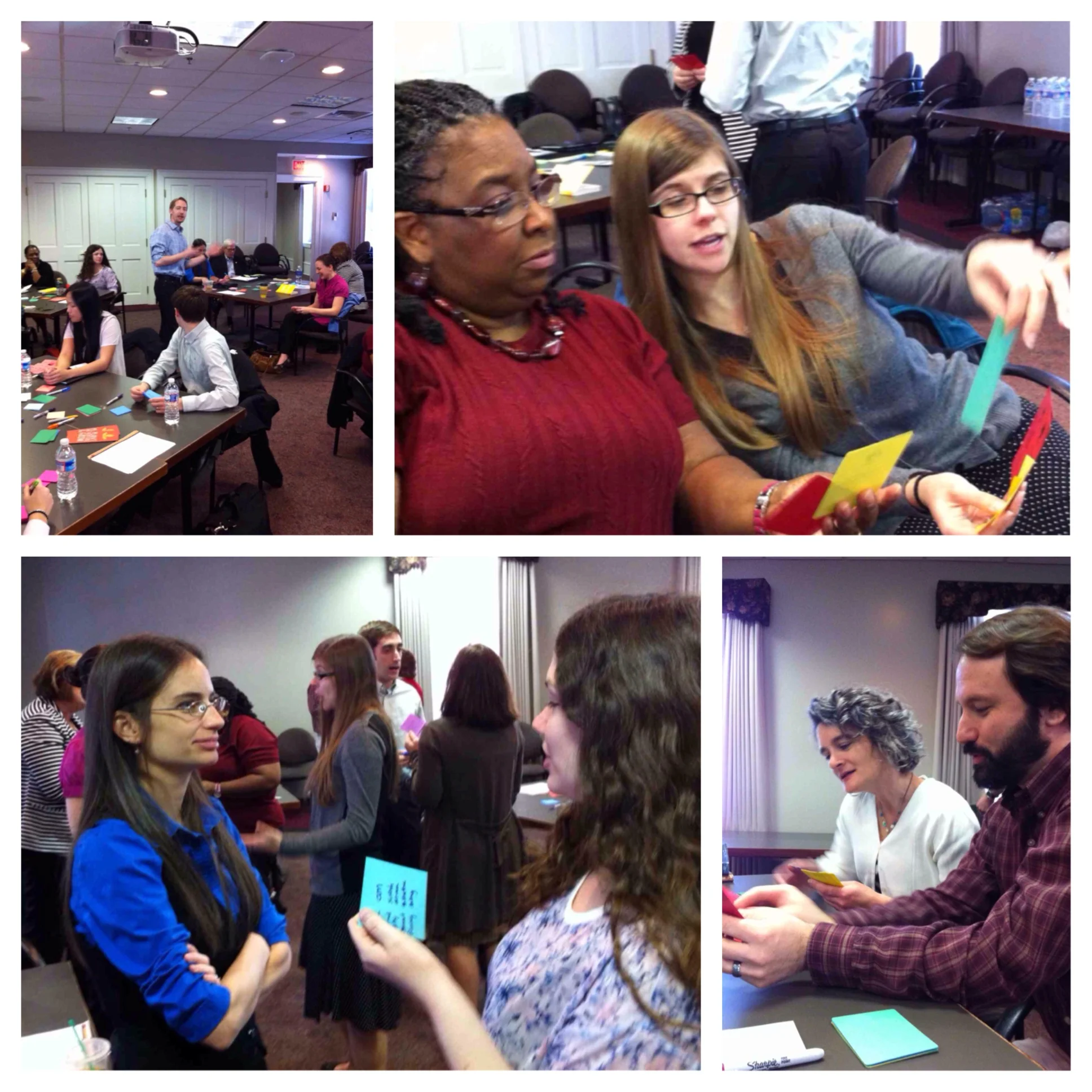
That's why working with teams is both challenging and rewarding - it's hard to get folks to look at how their own actions impact teams, but when they do incredible changes can take place. I'm reminded of this often these days as we work with the Development and Alumni Relations (DAR) folks at VCU on Team Effectiveness.

Meet people where they are, not where you want them to be.

Like most of us, DAR staff work in a fast-paced environment and can find it difficult to slow down and reflect on how they are directly impacting their team members. And when they do reflect, no one wants to readily admit that they are hindering, rather than helping, their coworkers. Yet that is exactly what we are asking them to do.

One of our favorite quotes at Floricane is "Meet people where they are, not where you want them to be." It seems that the DAR staff at VCU is taking it to heart; and while their teams are not going to transform overnight, we anticipate great things to come.

A Colonial Retreat with CEOs

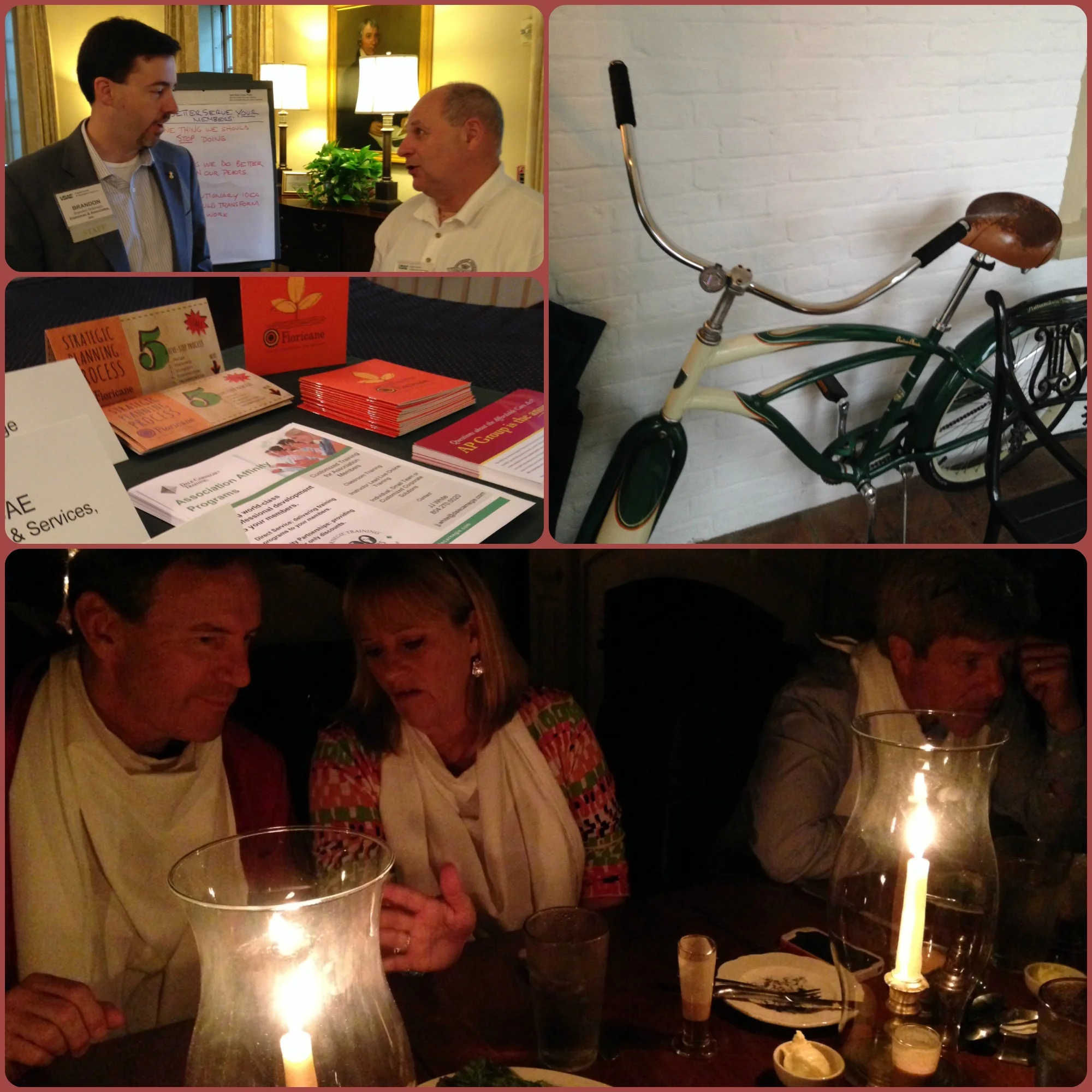
We've discovered the perfect recipe for a CEO retreat. It involves four inches of rain, tri-cornered hats and 40 association executives ready to wrestle with big questions.

Earlier this week, I spent two days with a small group of CEOs and leaders from some of Virginia's best associations -- as well as some private industry leaders -- at the Virginia Society of Association Executive's annual CEO Retreat at the Williamsburg Inn in Colonial Williamsburg. A steady, and sometimes torrential, rainfall kept everyone focused on the discussions at hand. And the colonial setting made conversations about revolution feel entirely appropriate.

The idea of blowing up small things -- governance structures, approaches to leadership, programs, membership dues -- came up throughout our time together.

Which made me wonder why so many organizations are reluctant to carve out time to analyze, deconstruct and rebuild key parts of what they do. Everyone in the room intuitively understood the organizational evolution from start-up to growth to maturity to decline -- and the critical importance of reevaluating and reviving before you hit the peak of the S-curve. (Or blowing things up and starting anew.) It's lighting the proverbial fuse that makes people nervous.

As conversations continued, I was heartened to hear a shift in thinking as the ideas began to move toward commitments:

  • To explore dramatic reductions in the size of boards to increase organizational agility
  • To eliminate oversized events and replace them with more topical and targeted programming
  • To ignite new leadership opportunities for employees and members
  • To focus on member value at both an emotional and practical level

It's not easy running an association in 2014. Technology, economics, demographics and other critical factors have made everyone's work a little more challenging. Associations have the added struggle of being seen as a "nice to have" for many individuals and organizations who didn't question the value of their membership a generation ago.

It puts the burden squarely on association executives to continue asking important questions about value and relevance -- and periodically getting out of the conversational vacuum to explore change with their peers. Or, heaven forbid, with their members.

FEED Me, SeyMORE.

Wednesday, August 27th I met at FeedMore in Richmond with other like-minded young professionals. HYPE (Helping Young Professionals Engage) sponsored a lunch time event where we listened as Douglas Pick, CEO of FeedMore Richmond, and Dominic Barrett, Director of Shalom Farms, discuss food, healthy food and how to get good, healthy food to those who need it. It was an enlightening event. 

FeedMore

First off, FeedMore Richmond is an all compassing group containing Meals on Wheels, the Food Bank, and the Community Kitchen, where they prepare all the meals in house. They provide food to thirty-five counties and five cities, all the way into North Carolina. Their goal is clear: empower lives and provide a healthy community through collaboration and leadership. This is very necessary. According to Barrett 75% of children need assisted lunch programs.

At Shalom Farms they work hard to battle local hunger. Through their volunteer farm, located in Goochland, they help produce food for the local food bank and work with Bon Secours on food prescription programs. Anyone can volunteer to help, with a friend or group. After the talk and tour I am motivated to volunteer to help the ongoing battle against hunger, but most of all I am brightened by the love, consideration, and passion that encapsulates everyone that knows the need and does not falter to help.

The FeedMore food bank that we toured.

The FeedMore food bank that we toured.

Not an Oxymoron: Outgoing Introverts

Our friend Trey Hartt, Head Development Dude at local non-profit ART 180, recently shared a link to this article: "19 Struggles of Having an Outgoing Personality But Actually Being Introverted."

We love this for a couple of reasons: It accurately describes about half of the Floricane team (in my opinion, at least!), and it highlights the fact that a huge number of us feel like we fall somewhere in between extreme introversion and extreme extraversion. It's not all black and white, folks.

It's no secret we value self-awareness here at Floricane, which is why we offer Insights® Discovery introductory workshops every few months. It's definitely our most popular public workshop. Sign up for the September 11th full-day session, and see what the fuss is all about!

Photos from SHOP CLASS 2014!

[Photography by Ansel Olsen]

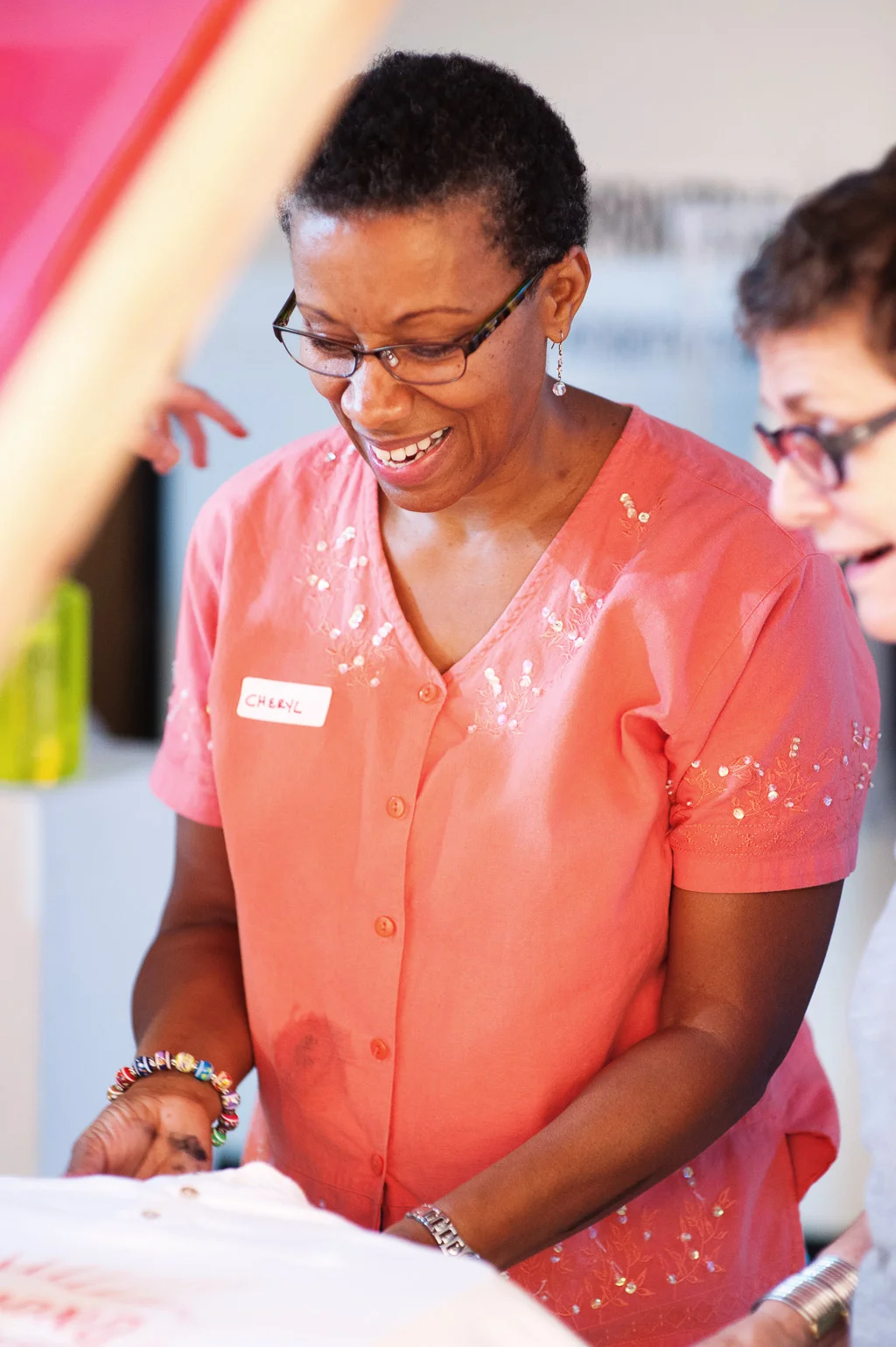
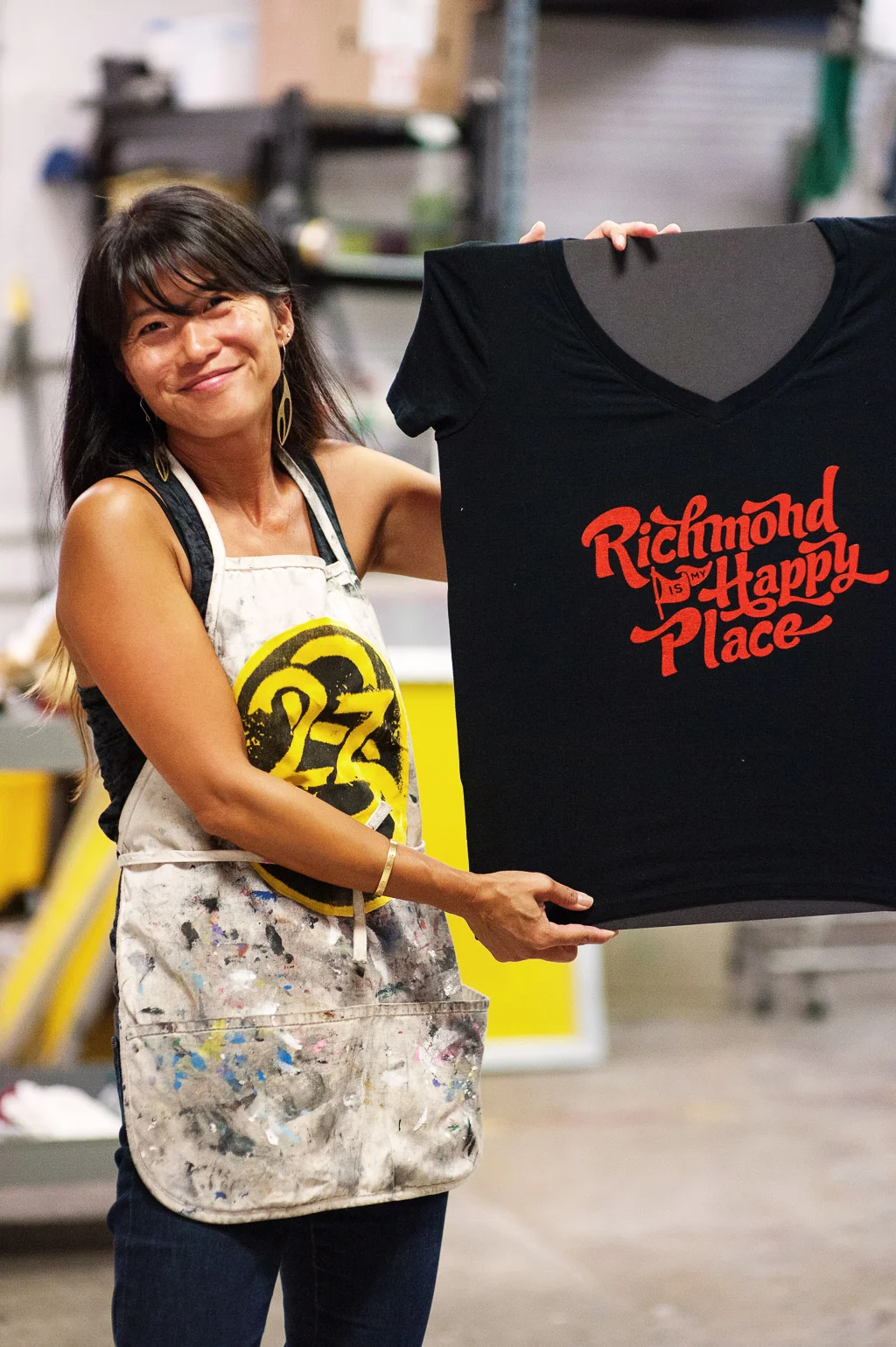
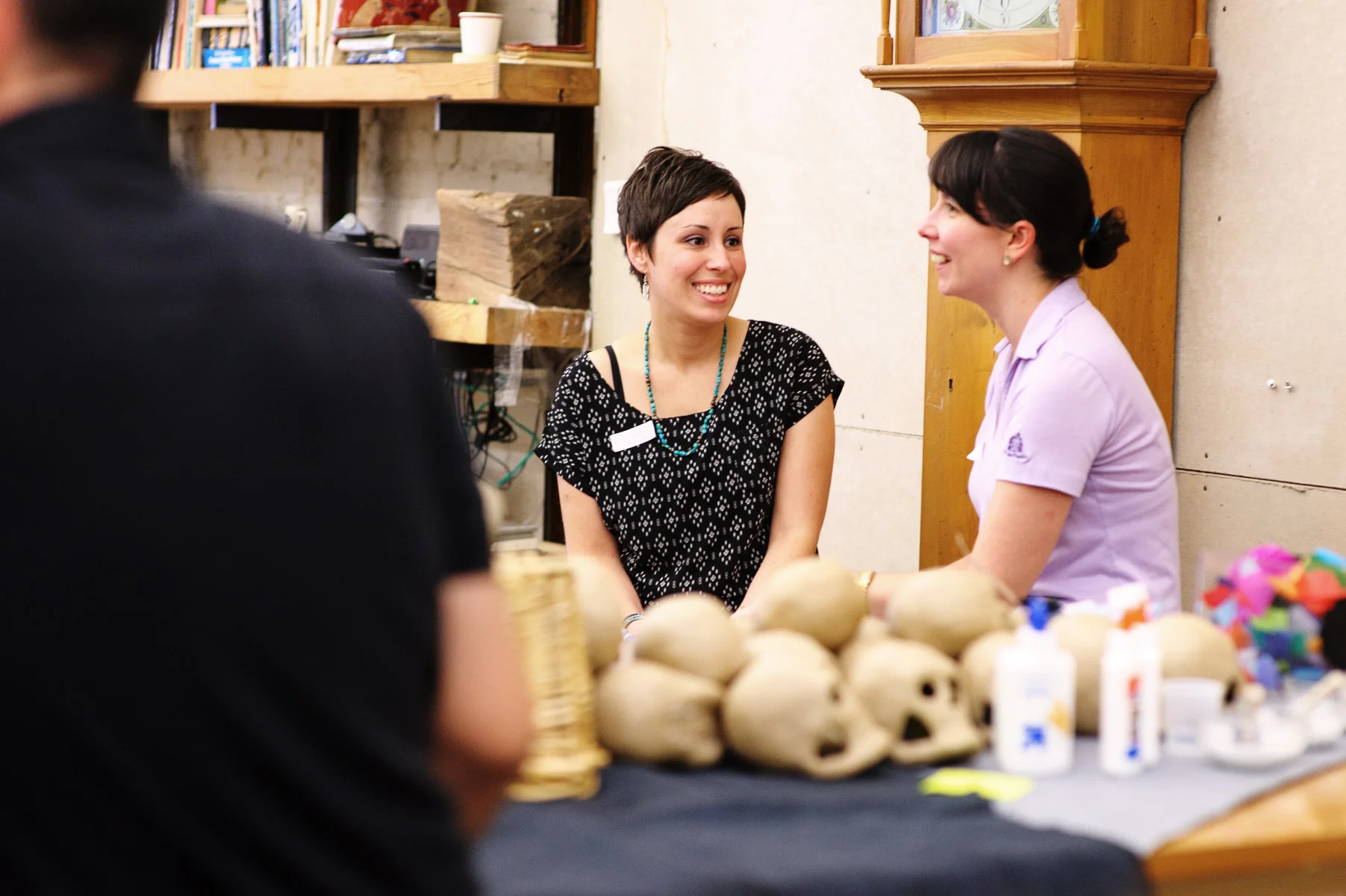
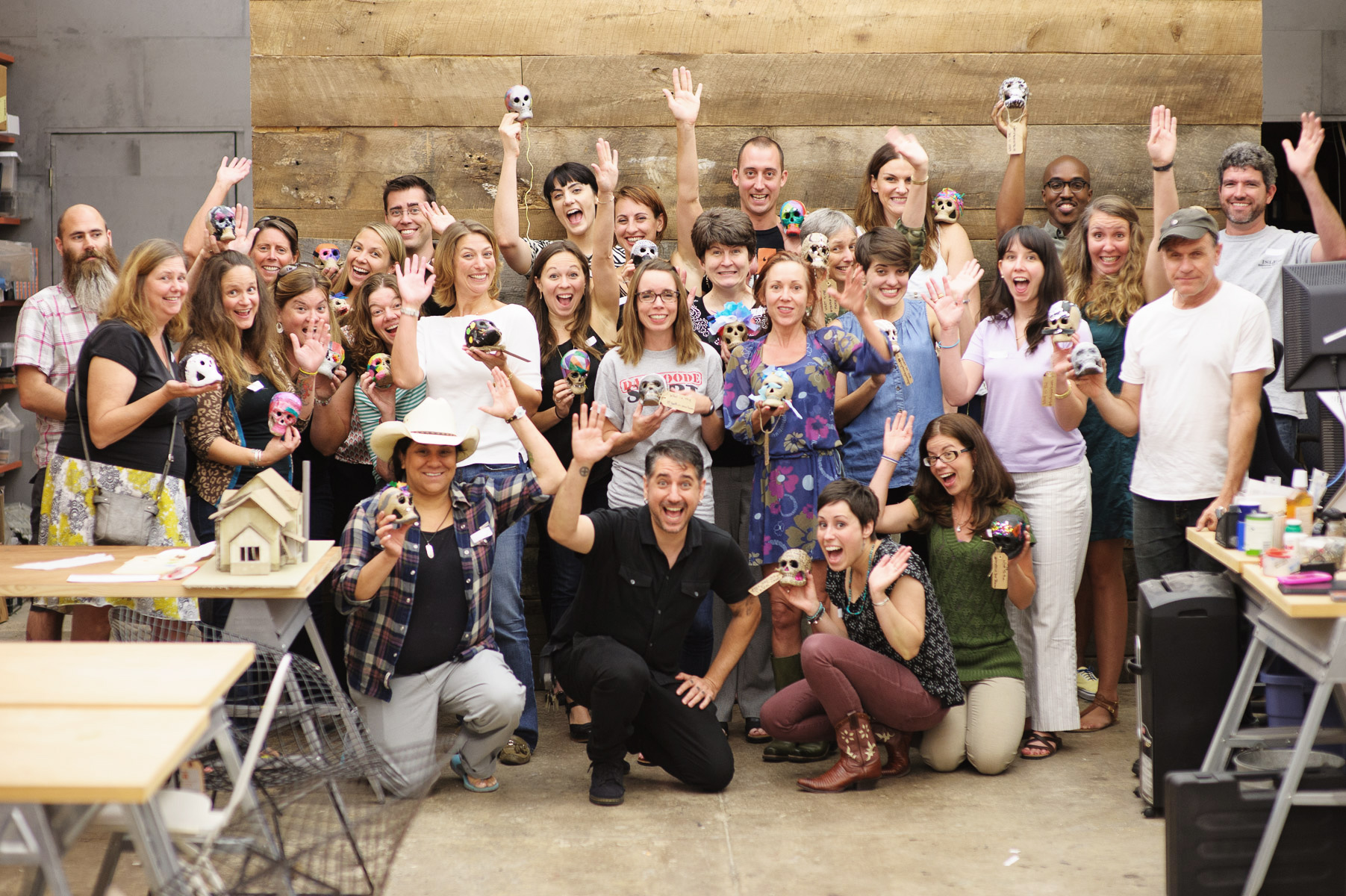
SHOP CLASS RVA was revived this past August, and three new (free!) one-time-only classes were offered at the Marvin Lang Building and Studio Two Three. John and I were two of the organizers this year, along with Lauren Boynton, Peter Fraser, Ansel Olsen, and Lauren Stewart. We had a blast!

Click through the gallery to see photos from the entire 2014 series, including:

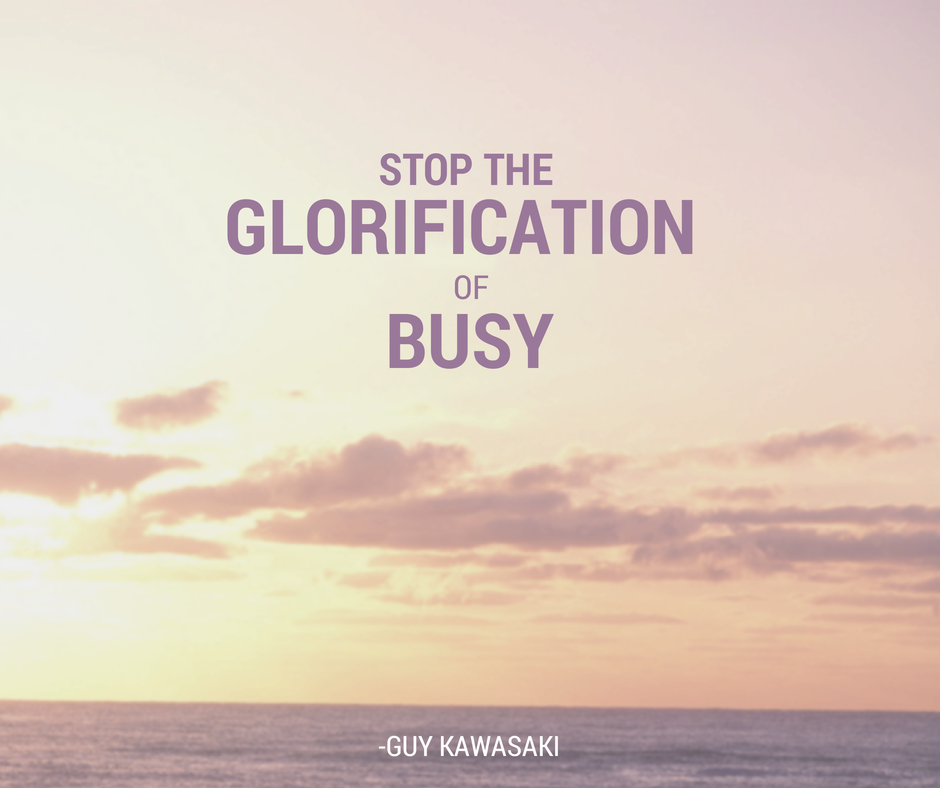
The Glorification of Busy

Glorification of Busy Floricane

I saw this quote floating through the internet a few months back, and it's stuck with me ever since. The quote, by Guy Kawasaki, is from this HuffPo article promoting Arianna Huffington's book Thrive. Guy says the two main metrics for success in our society are money and power, which can lead to a culture of over-worked, over-stressed, and downright busy people. A third metric, according to Arianna Huffington, should be to thrive-- taking care of yourself, slowing down, and not letting your entire world revolve around work.

There’s no place on your resume to put ‘I said no to [some great opportunity] so I could cook dinner with my girlfriend in the evenings.’

I haven't read the book, but I've been thinking about this idea a lot lately. Especially for young professionals like me (whoa, I've never called myself that before), staying busy is simply expected. There's no place on your resume to put "I said no to [some great opportunity] so I could cook dinner with my girlfriend in the evenings." Full-time work, professional associations, volunteer work, networking, clubs... We're sort of led to believe the more you can pack into your schedule, the better. At one point I even felt it was necessary to have a part-time job on top of my full-time job at Floricane. What was I thinking

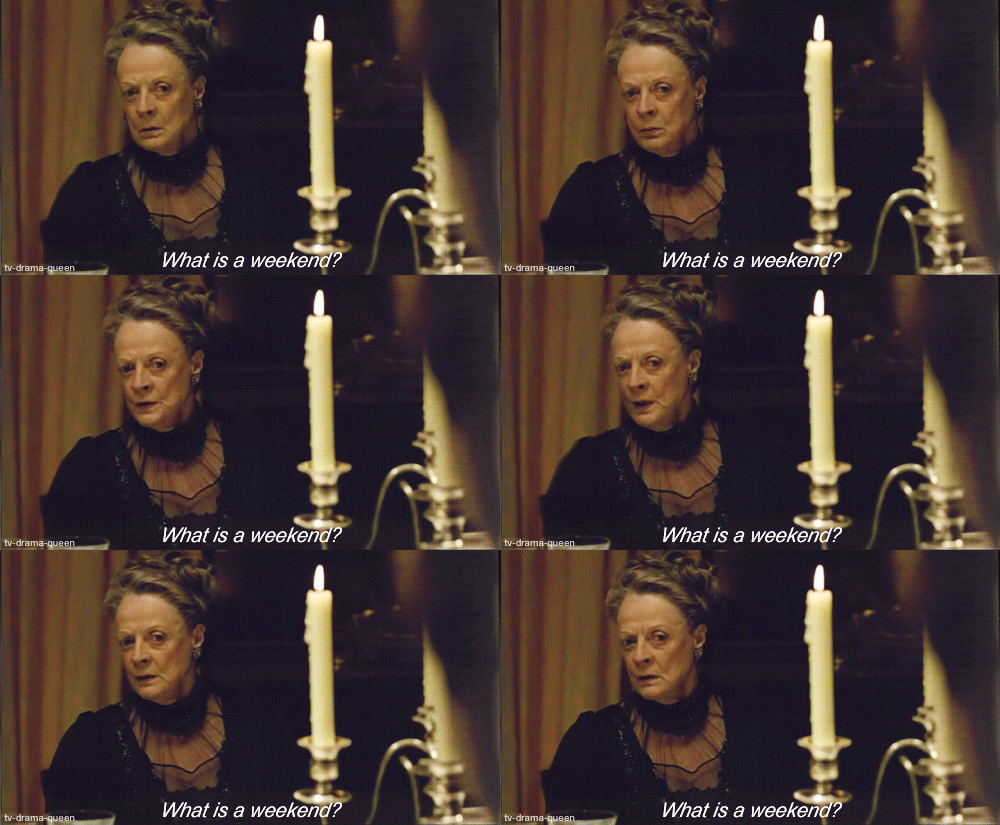
I should put Downton Abbey GIFs in all of my blog posts from now on.

I should put Downton Abbey GIFs in all of my blog posts from now on.

Here's what I think is important: don't get so burned out being *busy* that you can't dedicate yourself fully to the important things. Maybe turn your phone off. Say "thanks, but no thanks" sometimes. And when you do say yes to extra commitments, make sure it's for something that you truly care about and to which you're happy to give your time and energy.

Side note: I recently decided to take an indefinite break from what was basically a full-time hobby (competitive roller derby), and while it was a tough decision to make, the time that it's freed up in my life has been the hugest gift (I actually get to see my girlfriend now! Hi, Samantha!).